
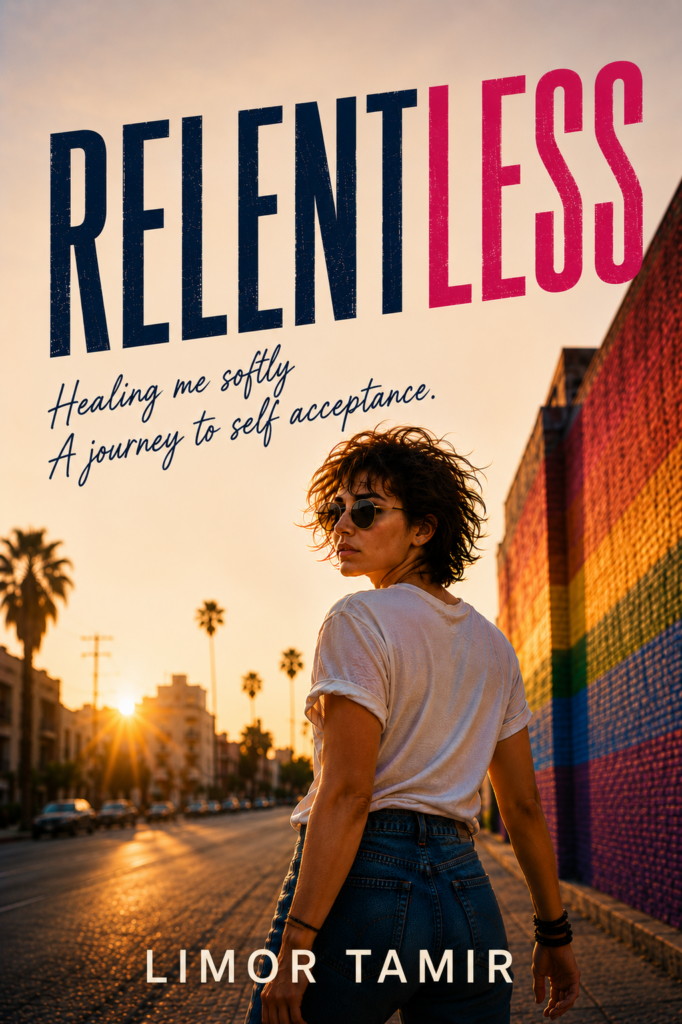
Relentless: The Journey of Healing Me Softly is an inspiring memoir about one woman’s lifelong search for belonging, identity, and self-acceptance. Following a childhood marked by emotional abandonment and years of hiding her true self, Limor Tamir struggles to reconcile her sexual identity, personal relationships, and relentless need for external validation. A life-changing diagnosis of multiple sclerosis forces her to confront the emotional patterns that have shaped her life and leads her to an unexpected path of healing. Through deep self-exploration, she learns to replace fear with authenticity, people-pleasing with healthy boundaries, and self-rejection with compassion. Blending memoir, psychology, and spirituality, the book explores how profound transformation begins when we stop searching for ourselves in others and finally come home to ourselves.
Relentless: The Journey of Healing Me Softly is a deeply personal memoir that traces Limor Tamir’s lifelong search for belonging, identity, and self-acceptance. Spanning more than four decades, the book intertwines childhood memories, emotional trauma, sexual identity, chronic illness, and spiritual transformation into a story of profound healing.
The memoir opens in 2007, shortly after Limor is diagnosed with multiple sclerosis. Conventional medicine offers no explanation for the disease beyond describing it as an incurable autoimmune disorder. Desperate for answers, she meets healer and teacher Ilana Rogel, whose radical perspective challenges everything she believes about illness. Rather than viewing disease as an external enemy, Ilana presents it as a reflection of unresolved emotional patterns and a lifelong disconnection from the self. This encounter becomes the catalyst for Limor’s journey inward.
From there, the narrative returns to Limor’s childhood. Following her parents’ divorce, her mother remarries quickly, leaving Limor feeling emotionally abandoned and displaced within her new family. Eventually she is sent to Kibbutz Hulda, where, despite discovering friendship, athletic talent, and a sense of community, she continues searching for the maternal love and emotional security she never received at home. Throughout these years she repeatedly attaches herself to teachers, caregivers, and foster families, believing that someone else can fill the emotional void within her.
Adolescence brings another profound realization. Limor falls deeply in love with Amy, an American volunteer lifeguard at the kibbutz. Through Amy she first confronts her sexual identity, but growing up in Israel during the late 1970s means that accepting herself carries enormous fear and shame. Her confusion deepens through subsequent relationships with women while she simultaneously attempts to conform to social expectations by dating men. A formative trip to San Francisco finally allows her to experience an openly LGBTQ+ community for the first time. Surrounded by people living authentically, she acknowledges what she has long resisted: she is a lesbian.
Returning to Israel does not bring peace. When Limor comes out to her family, her mother reacts with rejection, humiliation, and attempts to “cure” her through therapy. The emotional rupture forces Limor to leave home and begin building an independent life in Jerusalem. Over the following years she experiences passionate relationships, painful separations, financial struggles, and repeated cycles of emotional dependency. Although she gradually becomes more comfortable with her sexual identity, she continues searching for validation through romantic partners, professional success, and the approval of others.
Alongside her personal life, Limor develops into a successful entrepreneur, eventually owning a thriving retail business. Outwardly she appears accomplished, generous, and admired. Inwardly, however, she is driven by an exhausting need to please everyone around her. Her identity becomes inseparable from being indispensable, endlessly giving while neglecting herself. This pattern extends into friendships, family relationships, and romantic partnerships, leaving her emotionally depleted despite external success.
Everything changes when multiple sclerosis enters her life. Initially terrified by the diagnosis and convinced that her future has been stolen, Limor slowly embraces Ilana Rogel’s unconventional teachings. She begins examining the emotional roots of her lifelong patterns: abandonment, people-pleasing, lack of boundaries, perfectionism, and the constant search for love outside herself. Rather than fighting the illness, she learns to interpret it as a messenger demanding change.
The second half of the memoir follows this painstaking transformation. Limor reshapes her nutrition, lifestyle, relationships, and inner dialogue while confronting unresolved conflicts with her mother, her sister, former partners, and, most importantly, herself. She recognizes that many of her acts of generosity have been attempts to earn love rather than authentic expressions of compassion. Learning to establish healthy boundaries becomes as essential to her recovery as any physical treatment.
Gradually, reconciliation replaces resentment. Although her relationship with her mother remains complex, Limor begins interpreting her childhood through a broader spiritual lens, viewing painful experiences not simply as wounds but as catalysts for growth. She also reconnects with influential figures from her past, revisiting childhood memories with greater understanding and gratitude rather than bitterness.
As the years pass, Limor experiences long periods without further MS attacks. She attributes this not to a miracle or a single therapeutic method but to an ongoing commitment to self-awareness, emotional honesty, individualized nutrition, and self-care. Instead of allowing the illness to define her, she transforms it into a compass directing her toward authenticity.
By the memoir’s conclusion, Limor has built a new life rooted not in external approval but in self-acceptance. She finds lasting love with Adi, leaves behind the exhausting identity of “the good Limor” who sacrificed herself for everyone else, and becomes a healer and coach, helping others navigate their own journeys of recovery and personal growth.
Ultimately, Relentless is far more than a memoir about illness or sexual identity. It is the story of a woman who gradually discovers that healing begins not with changing the body, but with rebuilding the relationship she has with herself. Blending autobiography with psychological insight and spiritual reflection, the book explores universal themes of belonging, identity, forgiveness, resilience, and the lifelong courage required to become fully authentic.